
Jamie Fisher - 'Nobody Broke Your Heart: an Intimate Biography of Elliott Smith'
One of the greatest music biographies I've ever read. The book is sublime, loving, critical, investigative, analytical.

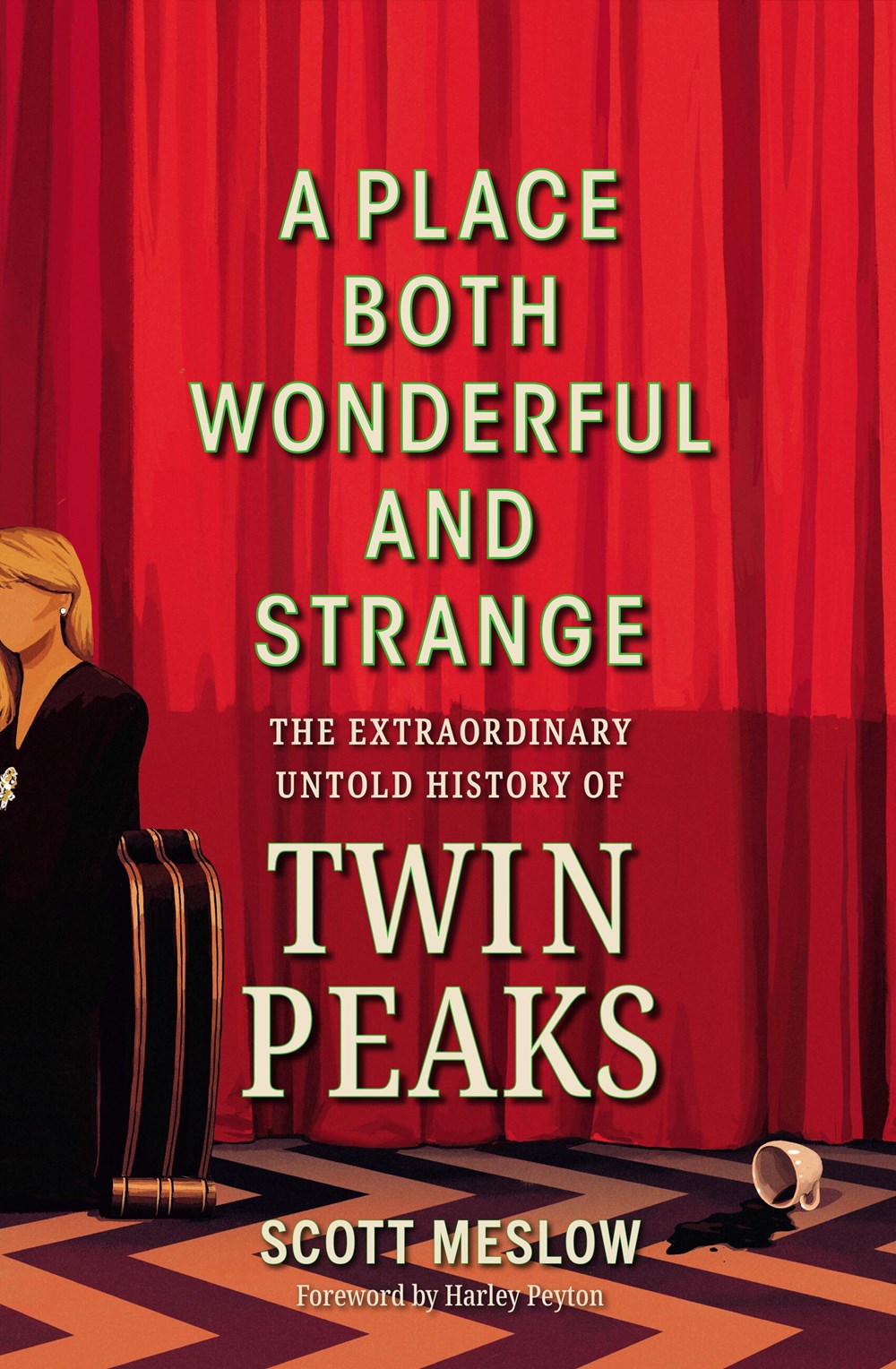
This is the best book on Twin Peaks that I’ve read. Beware, this review contains spoilers about the TV show Twin Peaks.
I’ve read several Twin Peaks books and attended a convention where Bob Engels, one of the show and film writers, spoke. I love Fire Walk With Me; I truly love that film, which I think transcends not only the smarty-pants trainspotter fan realm but is the first film I think of when I think about films that successfully describe pedophilia, and I mean that in my most respectful way.
Twin Peaks is about many things - far beyond what most media and TV series ever touch upon. Twin Peaks is glossy, mysterious, and transcendent. It stands in a league of its own, not least through its third series, which was made a quarter of a century after the second series. I think the first and the third series all remodeled what people thought TV could do.
If you’ve never heard about Twin Peaks before: don’t fret. The Twin Peaks universe covers a plethora of topics, worlds, drugs, loves, fears, romances, deaths, interactions, in many forms, covered by a seemingly unthreatening 1950s North American veneer. The show actually often transcends whatever you think you’re watching into another world, then another world, and then, you start connecting dots and making references of your own. The show treats the viewer like a thinking being, someone who thinks they’ve got stuff covered, until they find themselves deep inside of Twin Peaks, wherever that is.
This is not a dainty little detective-story-cum-soap-opera we’re talking about. This is Twin Peaks.
Made by Mark Frost and David Lynch, the show was something new entirely when it was first aired in the early 1990s. Laura Palmer, a young local, is found dead by a local fisherman on a lakeshore. An FBI detective with odd investigation methods rolls into the quaint town. The detective, Dale Cooper, speaks into a dictaphone, clearly a third person. But who is this third person? And why is he saying everyday things into the dictaphone? It can’t be an assistant: what he’s saying is too familiar for that, too personal. And who’s the dead girl? Why does the show feel like it’s set in the 1950s? Now, that’s during the first minutes of the very first episode.
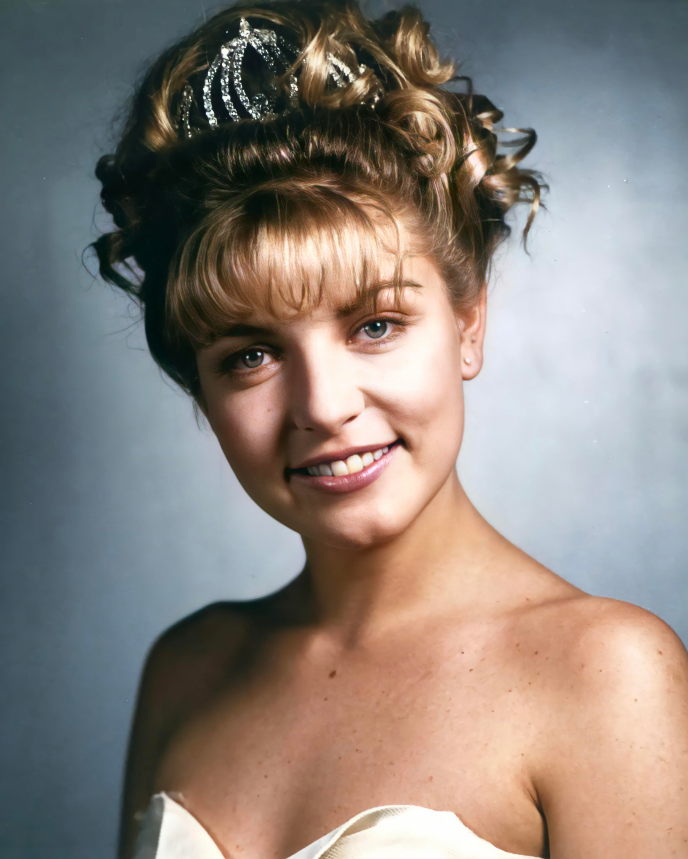 Laura Palmer in a prom queen photograph.
Critics loved the show. Viewers loved it, too, glued to their seats as they liked some of the characters and plots and wanted to know who murdered Laura Palmer. Twin Peaks was one of the first shows to use a story arc that spanned more than one episode. Apart from that, Twin Peaks broke new ground by not stupidly feeding viewers droll predictability. The script implied things but rarely explained them. The show was a soap, and a deep dive into dark recesses of the human mind, and a journey into darknesses and beauties that exist beyond the physical world. The first series was universally loved, the second series was panned as extremely weird and far worse than the first; then, a quarter of a century passed. The third series was aired and it floored everyone.
At the beginning of filming the first series, even the creators of the show didn’t know who killed Laura.
Cooper has come to Twin Peaks to solve Laura Palmer’s (Sheryl Lee) murder. At the time the pilot was written, it was an inherently doomed mission; not even Lynch and Frost knew who had done it. “We didn’t want to solve it, at that point,” says Frost. “That was a clear decision on our part, creatively. We didn’t want to limit ourselves. And we felt if we locked it in too early, that’s exactly what we’d end up doing. [If we waited], something that might occur to us that’s even more interesting.”
Where the cocreators disagreed was whether the murder mystery would ever be resolved. “I felt that we would have to do it sooner or later,” says Frost. “David, in his kind of wonderful, Peter Pan sort of way, thought, Well, no, we don’t ever have to solve it. And I said, ‘Well, that’s not how television works. You have to give them something at some point, or they’re going to just drift away.’”
Meslow started his book with Mark Frost’s blessing and cooperation. Even though the book could easily have been a simple genuflection to its makers, to the fans, a wikipedia-dig cash grab, it is not that. Meslow has a clear, cool-headed mind, a sharp eye, an inquisitive mind, which is very hard in a situation like his, especially when an author carries the heft of being a Twin Peaks fan.
“Kyle was very resistant to doing a series,” says Johanna Ray. “We didn’t know that we had him until the very last minute. But usually, David ends up getting what he wants.” An early, extreme example of that came on Ray’s first day on the show, as they discussed who might play Andy Brennan, the weepy deputy with a heart of gold. “Harry [Goaz] was David’s limo driver,” says Ray. “I was in a meeting with David and Mark Frost, and David said, ‘Well, I know who I want for the deputy sheriff. This guy that drove me to the Roy Orbison concert the other night.’ Mark and I went, ‘Oh, here we go,’” but they gamely agreed to meet with Goaz, who had exactly zero credits to his name. “And he turned out to be brilliant.”
Even though it’s easy to point to David Lynch and say he made Twin Peaks, that’s just popular misconception. Mark Frost created Twin Peaks together with David Lynch. Actually, Lynch left Twin Peaks fairly early during the first series to go film Wild at Heart while Frost carried on without Lynch. On the other hand, the creator collaboration is a dichotomy and something that would, I guess, be wildly different if only one of the Lynch/Frost duo held the reins to everything.
A deft touch is used throughout the book to convey how much chance, oracle, the unknown, dreams, non-conventional wisdom, and mere feeling carried the show in every way, from character creation, to casting actors, to challenging themselves, to placating network executives, to making the soundtrack.
There was an enormous amount of freedom,” said director Tina Rathborne. “I had absolutely no idea what the plot was about,” said Tim Hunter, who helmed one midseason episode. “I mean, there’s so much plot in it. Twin Peaks is just full of plot. Almost every scene is an expository plot scene, and that’s kind of miraculous, in a way, to have a show that had so much plot on the one hand, but the plot actually mattering so little because the subtext of the scenes is almost everything in Twin Peaks.”
This quote, about Denise Bryson, a trans person played by David Duchovny, says a lot about transcendence:
Denise appears for just one scene in Twin Peaks: The Return, but it’s one of the show’s most memorable—so much so that it’s routinely quoted by people who haven’t seen a frame of Twin Peaks. When Gordon Cole announces his intention to launch an investigation in Buckhorn, South Dakota, he needs to clear it with his superior officer: Denise Bryson, who has climbed the ladder to become the FBI’s chief of staff. It’s in this scene that Gordon Cole, played by Lynch himself, gets the last word on Denise—one that was almost instantly adopted as a rallying cry by the LGBTQ+ community and its supporters. “When you became Denise, I told all your colleagues, those clown comics, to fix their hearts or die,” says Gordon. “I said, ‘We’ve got to bring [Denise] back. And I think she’s the head of the FBI,’” says Mark Frost. “But I’ll give David the credit. He came up with ‘Fix your hearts or die.’ I’ve seen people carrying that poster at protests over the last few months. There are probably hundreds of tattoos.”
Meslow writes beautifully about Twin Peaks: The Return, which is the name of the third series of the show. He untangled a lot of the weirdness and connects many dots for me. When I was young, I hung out on Usenet - a kind of pre-Internet message-board - and discussed Twin Peaks with fans. People knew their stuff; or, at the very least, people offered their ideas, conclusions, inspirations, and their own creations.
Miguel Ferrer is one of the actors who appeared in Twin Peaks: The Return but died, sadly, before the show premiered. Due to his obligations to NCIS: Los Angeles, his Twin Peaks: The Return scenes needed to be filmed on weekends, and he died at age sixty-one, of throat cancer, less than a year after Lynch’s production wrapped. “I would bet a bag of gold that not a single crew member or cast member that may have been disappointed to work a bunch of Saturdays regrets doing it,” said singer and actress Chrystabell, who appeared as FBI Special Agent Tammy Preston in a number of scenes with Ferrer, in a tribute penned after he passed.
Ferrer’s return to the world of Twin Peaks offers a wonderful swan song that adds a few more iconically caustic moments to Albert’s already lengthy list. (“Fuck Gene Kelly, you motherfucker,” he snarls as he stumbles through heavy rainfall.)
I fucking love Albert, the character played by Miguel Ferrer.
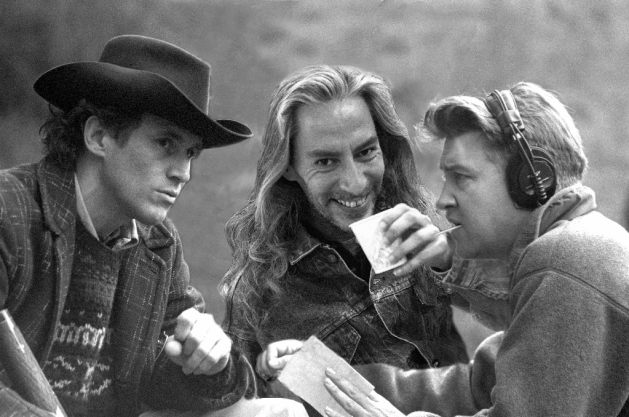 Michael Ontkean, Frank Silva, and David Lynch. Photograph by Richard Beymer, who played Ben Horne. For more of Beymer’s wondrous behind-the-scenes photographs, see Photography by Richard Beymer.
Still, the structural principle Lynch and Frost had devised remained sturdy: Whenever it felt like Twin Peaks might be going down a fruitless detour, a new development in the murder mystery pulled things back on track. It also led to what Peyton recalls as “Twin Peaks at its best”: the brief life and violent death of a bird named Waldo. “It starts out as, Well, this is just weird,” says Peyton. “And it’s also sort of funny. And then it’s also tragic.”
Or, in a word, the Waldo subplot was Lynchian—a shorthand for a specific tone and style that would be defined a few years later, by the writer David Foster Wallace, as “a particular kind of irony where the very macabre and the very mundane combine in such a way as to reveal the former’s perpetual containment within the latter.”
Meslow has spoken not only with Mark Frost but with most of the major players in the series, bar Lynch. There are a lot of stories that probably could only come from long and honest conversations with cast members, producers, directors, and other persons involved.
Then, there’s also the research. A lot of thought, time, patience, puzzling, and passion has gone into making this book.
In its own quiet way, Twin Peaks had been building up to this moment all along. There is a moment in Scott Frost’s The Autobiography of F.B.I. Special Agent Dale Cooper—published a month before the finale aired—in which the fourteen-year-old Cooper, while suffering from an asthma attack, receives an unsettlingly familiar nocturnal visitor. “A man who I have never seen was trying to break into my room,” writes the young Dale. “He kept calling my name and said that he wanted me. He then screamed, and after a moment it turned into a kind of roar as if he were some kind of animal. I told Mom about it and she said that she knew about ‘him,’ and that she has the same dream, and that I must never let the man into my room.”
There’s a lot of analysis, wonderful stories from people who obviously are in throes after Lynch’s death; in spite of that, Meslow has picked up pieces from many places and built something unique and wonderful. Give this book to someone and they’ll be better for it.
This book is my favourite non-fiction book of the year so far and I eagerly await Meslow’s next book.
One of the greatest music biographies I've ever read. The book is sublime, loving, critical, investigative, analytical.
A impassioned, needed, and arrhythmic book about a groundbreaking record label and its great artists and producers.
A messy collection of memories from a life as a music lover, a punk musician, and a music writer.