

Jamie Fisher - 'Nobody Broke Your Heart: an Intimate Biography of Elliott Smith'
One of the greatest music biographies I've ever read. The book is sublime, loving, critical, investigative, analytical.

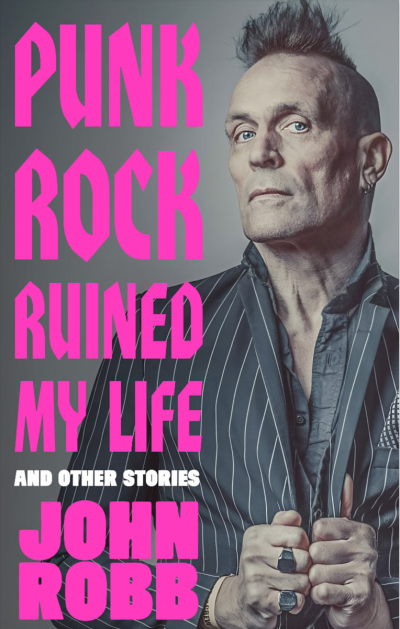
John Robb grew up in the 1970s and 1980s in England. I enjoyed reading his book about goth and he seems an affable character. Sure, he’s prone to writing in rococo curlicues (meaning he likes to faff with words, for example, ‘impossible hairdos/don’ts’) but a lot of what he’s written, when let loose on a focused subject, is nice.
Punk rock was the accelerator. It not only sounded great – it empowered you to form a band, write music, get on stage, make your own fanzines and change your world. Getting lost in its high-decibel rush, punk rock would be the crash course for the ravers to understanding the surrounding noise of life. It also taught that ideas were the currency as they exploded like a million Roman candles, incandescent with a wild, life-affirming energy.
This book is about punk, about what it did to Robb and how he’s seen it affect people around him.
Initially, I had no idea that Bowie was meant to be the coolest. I was just too young. It took time to realise that Bowie was obviously a genius and a cultural lightning rod whose interviews were opening doors to a seething underground and were peppered with pop art reference points. Bowie was a real crash course for the ravers, bringing William Burroughs and Iggy Pop into our adolescent purview, but we were too young, dumb and full of crumbs to fully understand then.
There’s something beautiful about reckoning with one’s younger self, the person who can’t take in enough.
In August 1976 Tony Wilson – the unlikely long-haired presenter on the local Granada TV news – hosted the Sex Pistols’ debut TV performance on his own anarchic arts show So It Goes. It was an electrifying and spell-binding spectacle. Resplendent in his ripped-by-tigers pink jacket and ripped hair and his amphetamine eyes, Johnny Rotten stared down the camera and snarled, ‘Get off your arses.’ He looked like a ragamuffin Pied Piper delivering a glorious out-of-tune cacophony and yelling at the passers-by, creating a twentieth-century mania. I listened to the clarion call, and like a handful of others I got off my arse, and then sat down again, because I had no idea of where to go next.
This paragraph is probably my favourite one in the book: the youthful urgency! yet not knowing what the hell to do with any of it.
The book goes fairly quickly from the formative punk years in the late 1970s to the 1980s. Speaking of which, one of my favourite bands:
Another harbinger of bright futures were the KLF, who I went to interview in their south London house. It didn’t seemed to have a ceiling and there was an American police car parked in the front room. They had embraced samplers and cut-and-paste dance culture to bring a situationist pop manifesto on their debut white label. During the interview they spun a captivating web with their theoretical talk and art school alchemy, making for an intriguing chat. The fact that they went and pulled it off made it even more interesting.
Robb’s band, The Membranes, recorded with Steve Albini. During that experience, Robb and Albini became friends.
Steve died suddenly in 2024, by which time he had already morphed into a very different figure. He had become an amiable elder statesman who retained the same fierce principles but was much less acerbic about them. Steve was never a noise merchant. As the years rolled by we kept in touch. I interviewed him several times and loved the albums and gigs by his new band Shellac, who from the start were like the logical conclusion of our world – the most perfectsounding band that ever existed and the band that all his recording brilliance somehow seemed created for. We got to play with Shellac a few times, like at the 2012 ATP festival, where they invited us on to the bill and were very kind to us, and we made up for that dreadful gig in Newport years before. We played at a festival in Croatia with them in 2018 and spent a brilliant night afterwards in the backstage tent in the warm night air, laughing at the absurdity of life and music. The last interview I did with him was in 2019 at Grauzone festival. It was an on-stage conversation and was fascinating. Steve was as funny and sharp as ever, and had not compromised his attitude to music making, but he suddenly apologised for his spikey younger self in a humble and quite moving way.
After roughly half of the book, it turns from being a punk-rock-life analysis into being a list of shorter recants of meets with younger musicians, as Robb turned into a music writer for Sounds.
That articulate intensity was also being played out by a new Welsh band that for a couple of years to come would still be off radar – the Manic Street Preachers. In 1988 the band’s guitarist Richey Edwards sent me their demo, with a long, neat and tidy letter that filled one side of an A4 sheet. In biro it eloquently listed all the reasons why the writer experienced rage and disgust at the state of the current indie music scene. The fear and loathing was in sharp contrast to the respectful tone and stopped me in my tracks. The enclosed cassette did the same and lived up to the band’s name. Right in the middle of the ecstasy love-in and the incoming baggy shuffle of the formless indie scene, here was a firebrand punk rock band with a manifesto that was out of sync with the times. This was a band I would be keeping tabs on.
It’s a bit strange to see a kind of wont in Robb to show off in the shadow of social-media glory. For example, he writes of being the first person to post a tweet about when The Stone Roses reunited. Why? Why is that a thing to put in your own book? What does that say about yourself?
All in all, the book is filled with brief anecdotes, some of which are very sweet, but I wish there’d been more analysis and less word-faffery. I mean, imagine what someone like Michael Bracewell could have done with this material. On the other hand, Robb is clearly a good writer: I wish the book were edited more tightly! To me, this is more of an unfocused collection of memories rather than something that could have ended up a very memorable book.
Punk Rock Ruined My Life is published by Manchester University Press on 2026-05-12.
One of the greatest music biographies I've ever read. The book is sublime, loving, critical, investigative, analytical.
A impassioned, needed, and arrhythmic book about a groundbreaking record label and its great artists and producers.
A marvellous book about Twin Peaks, how it came to be, how it was reborn, and its everlasting legacy.