
Jamie Fisher - 'Nobody Broke Your Heart: an Intimate Biography of Elliott Smith'
One of the greatest music biographies I've ever read. The book is sublime, loving, critical, investigative, analytical.

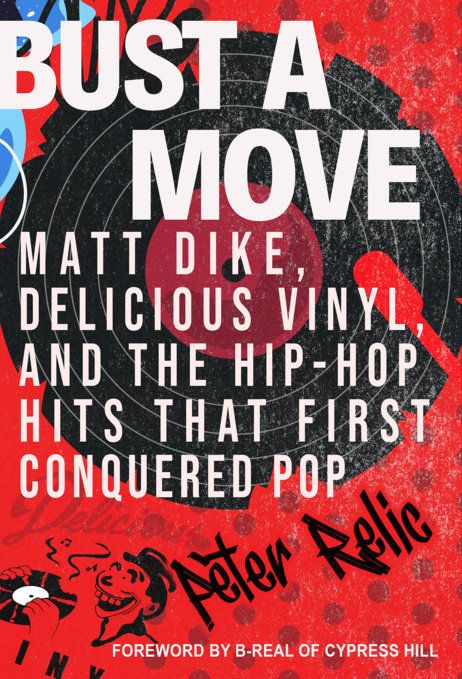
This is a book about Delicious Vinyl, a legendary hip-hop music label that was a very passionate project spearheaded by its founder, Matt Dike, who was a mythical person, mostly because he dropped away from the media eye after the 1980s. Not that he ever wanted to be in the media eye. He was a person who did things, who electrified people, and made things happen.
Matt Dike had too many records. Not according to his own personal calculus, by which his obsession with music could never be sated. The City of Los Angeles, however, felt otherwise. In the summer of 1987, inspectors sent an official letter threatening the twenty-six-year-old with eviction and “further legal action” should the weight of his collection cause the building he lived in to buckle.
It’s fair to say Dike and his closest people made much difference not only in the world of hip-hop but the world of pop music at large.
Matt Dike seems to have been a major part of Pauls Boutique, what I consider to be the best Beastie Boys album, one that would be impossible to legally release today, simply because of the immense number of samples that are incorporated in the album. The album formed me when I grew up. I downloaded the lyrics from FidoNet, a precursor to Internet—to simplify matters extremely—and I printed the lyrics at school. Usually that would have cost me a lot of money but I hung out on the same bulletin-board system as one of the admins at school, so… I pretty much still know most of the lyrics off Pauls; ask for Janice!
Delicious Vinyl released Tone Loc’s ‘Wild Thing’ and everything exploded. The first seconds of the video show Loc wearing a Delicious Vinyl t-shirt, repping his label. But before the single was released, Loc was about to get fired for holding his label hostage.
At the Delicious Vinyl office at 7471 Melrose, two new employees were readying rolled-up posters for record stores. Young hotshot retail promoter Steve Rifkin sat at a desk near Mike Ross’s twenty-one-year-old brother Rick, a fresh graduate of UC Berkeley. “I was eager to help out in any capacity,” says Rick. Nothing about the normal day at the office suggested Rick and Rifkin’s lives were in danger. Greg Jessie remembers what happened next: “I got a call from Orlando: ‘Get to the office quick, Tone’s holding them hostage for royalties.’ Tone had gone down there with a shotgun under his trench coat. He wasn’t posturing; he was genuinely upset at the reality of being broke. Tone felt like, ‘I did a record so instantly I should be paid.’ I talked him out of this silliness, like, ‘You just started the project, how could they owe you yet, be cool!’ I took him home. But it could have been ugly.” “It’s true, Tone was a Crip. He was a gangster, fine. But you can’t bring a shotgun to your record label,” says Mike Ross. Neither Mike nor Matt was at the office when it happened, but as Ross recalls, “Of course we were upset.” So Delicious Vinyl’s founders made a decision. “There was no way we could have him on the label after that,” says Mike. “I met Tone and Greg Jessie at Tommy Tang’s, the Thai restaurant by our office. I had a one-page termination agreement for Tone to sign. Tone said he wanted to take it with him, read it over, then bring it back signed.” But before Tone could bring it back, his already-scheduled new single came out. And as Ross recalls, “It started to gather momentum.”
The book contains a lot of stories about a handful of artists. There’s Tone Loc, Young MC, Beastie Boys, but the book contains more ruminations by people who were there than typical interviews. Is this a bad thing? No, it’s not. These are persons who were there at the time. They carry wisdom and history that Rick Rubin is trying hard to claim as gospel; these guys know what went down.
This song by Young MC is bliss to me. The production, by The Dust Brothers… Just listen to the first minute and hear Young’s stress on the ‘r’s, the style flip at 00:40, the snakey bass… Wow.
Another Stone Cold stand-out jam, “Know How” is the album’s sole production by Dust Brothers Michael “EZ Mike” Simpson and John “King Gizmo” King. Cooked up back in Giz and EZ Mike’s mold-infested shed in Claremont, “Know How” begins with a straightforward stacking of samples of Isaac Hayes’s “Theme From Shaft” and the Incredible Bongo Band’s “Apache” until, sixty-five seconds in, the beat explodes into a sequence of searing rock guitar licks and stereo-panned scratching by EZ Mike. With a funky bass line by Kevin O’Neal of SoCal band the BusBoys, the song’s tight cuts and stacked breaks are a prequel to the cosmic collage of Beastie Boys’ Paul’s Boutique. But make no mistake: The success of Stone Cold Rhymin’ was predicated on its big hit.
People like Mario Caldato Jr, one of the main tech and sound people behind Beastie Boys in the late 1980s and 1990s, come in and speak about the label and the industry. There’s also some welcome tool talk: these are all young men who didn’t have money and hence no money to buy expensive drum machines and computers, not that samples could be built by using computers: cutting magnetic tape with a razor was the name of the game. Also patience. And weed.
Decades later, Yauch recalled that first visit: “Matt broke out some crazy hash oil and got ourselves into a really compromised condition and played us a couple of tracks, including ‘Full Clout.’” Dike had surreptitiously slipped the cassette onto the stereo when they were frozen to attention. Stunned by the instrumentals, Mike D offered to buy them on the spot, but a quick sale wasn’t what Matt had in mind. With Yauch and Diamond due to return to New York the next day, they made an agreement: Dike would FedEx them a tape of beats to consider. “I said a prayer over the package, with great intention, that this would succeed and Matt would work with the Beastie Boys,” says Delicious Vinyl’s “it” girl Lisa Ann Cabasa, who explains that what had seemed to Yauch and Diamond like a social call was, in Dike’s mind, a serious attempt at getting the gig producing the follow-up to Licensed to Ill. What could be more fun than to attempt the impossible? “The one thing that was definitive was that we’d decided we couldn’t continue on with Rick [Rubin] and Russell [Simmons],” Mike D recalled. “We had to make our move.”
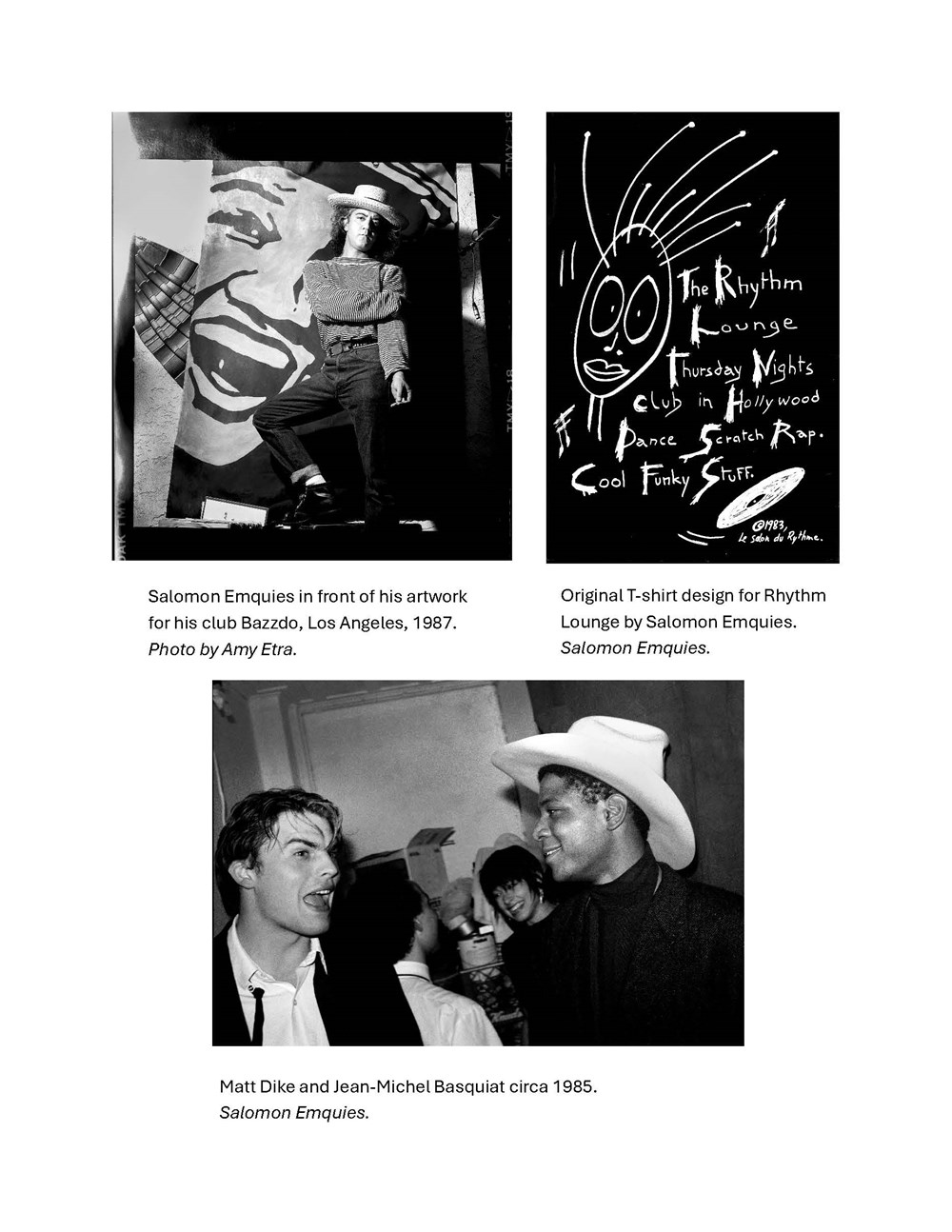
There was a wild sense of experiments everywhere, obviously. These guys didn’t want to copy. They wanted to sample and create something new, and they did. What was released at Delicious Vinyl not only rocked sales but made people around the world stand up and listen.
Then came money, drugs, fame, and destruction.
The book has its highs and lulls. Unfortunately, the lulls come fairly early at the start of the book. There’s a lot of focus on Young MC, back-and-forths that are, frankly, not even interesting to a trainspotter kind of muso-loving person like myself. I wish the book were more tightly edited to trim away some of the fat.
The book gets much more interesting when the author meets Matt Dike. The description on how they get to meet, via a phone call, is sweet:
As Matt Dike starts talking, the strange thing is that he doesn’t seem strange. He’s been a recluse all these years, out of the public eye. Certainly, this was going to be a difficult conversation—weird, cagey, evasive. But it’s like he’s just a regular guy chatting, defenses down. “I mean, I’m not bragging, but to be still getting letters that people want to use them in a movie? There’s gotta be a billion other songs you could use, but they’re still coming back to these songs, so I guess they have some sort of power. These records that were made quickly are still having this ingrained impact. They trigger something. When they’re played people pay attention. No matter how many times you hear them in commercials or whatever, they don’t burn out, and that’s just really really cool. I’m happy about it! I guess in a way these rap records are embedded in the consciousness. You know, I met Bill Withers and that’s what Bill Withers said: ‘My songs have become part of Americana.’ And I always wondered what he meant. And I guess . . . you know who Bill Withers is? The guy who wrote ‘Ain’t No Sunshine When She’s Gone’?” Yes, Bill Withers, he also wrote “Grandma’s Hands.” “What! Dude, you know ‘Grandma’s Hands’? I mean, I thought you’d know the hits, but you know ‘Grandma’s Hands’? That’s so cool!” So, Matt, would you be willing to do an interview? “Sure,” says Dike with a happy cackle. “I mean, you know ‘Grandma’s Hands,’ so how could I say no?” When might be a good time for you, Matt? “Now’s good!” Now? “Sure! Just come up to the house!”
Some of the anecdotes from that specific interview are just intensely sweet and make Dike seem like a lovely person. The author has added what other people thought of Dike, which all lines up to paint a glowing—perhaps too glowing—portrait of a hard-working, music-loving, and allround lovely person. The book contains a lot of sweet anecdotes about Beastie Boys, Jean-Michel Basquiat, Dike’s work with Brian Wilson, and going from obscurity to fame in no time, back to what really matters to most people: passion and care.
This book is a labour of love, no doubt. In a way, the author weaves in their own legacy with that of Delicious Vinyl, and there’s nothing wrong about that.
One of the greatest music biographies I've ever read. The book is sublime, loving, critical, investigative, analytical.
A messy collection of memories from a life as a music lover, a punk musician, and a music writer.
A marvellous book about Twin Peaks, how it came to be, how it was reborn, and its everlasting legacy.