


Eve Esfandiari-Denney - 'Girling'
A current, forgettable, and slightly constipated bedroom excursion.

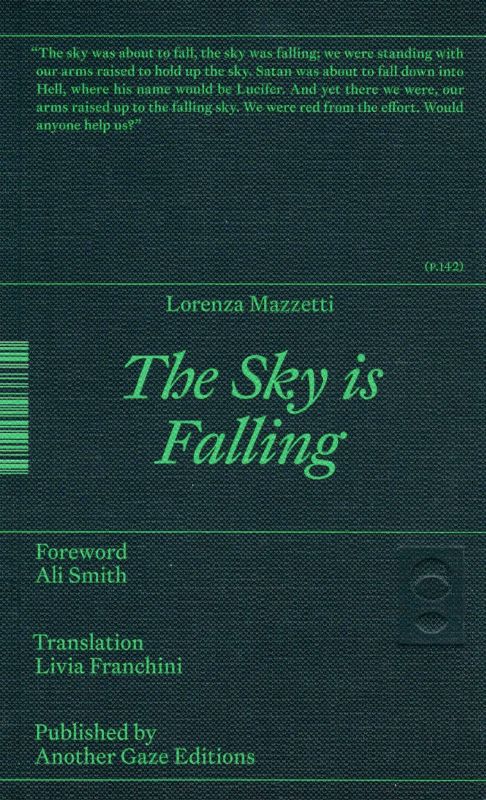
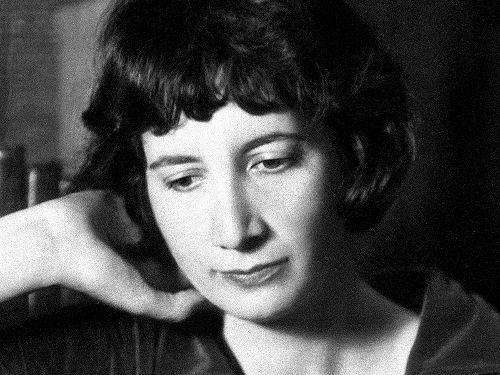
This is a fictional story that was partly lived by Lorenza Mazzetti, a powerhouse of a person, who described the childhoods of a few kids in Italy during World War II and, naturally, under Mussolini.
The novel has been out of print in the English-speaking world for years. Several pages have at times been censored. Another Gaze Editions have newly translated and published the new edition that I have read.
I read a bunch of books on a monthly basis. I picked up this book just because the book looked interesting and I really wanted to buy something from a local bookstore. Today, I am very happy that I picked up this specific book. It’s written by a master. From the afterword:
Mazzetti, who died in Rome in 2020 at the age of 92, was a spirited and brilliant pioneer and artist across several aesthetic genres. She was a writer of fiction, polemic and criticism; a painter; a seasoned Roman street theatre puppeteer (!); and a hugely influential filmmaker. As a filmmaker she was and still is far too unknown here in the UK, even though she was one of the four seminal filmmakers (and the only woman; the others were Tony Richardson, Lindsay Anderson and Karel Reisz) who formed the massively influential midtwentieth century movement known as Free Cinema, which altered the possibilities for British film narrative and film art.
The book is told by a girl who tells us her thoughts and what she sees. When the book starts, she and her sister are living with their aunt and uncle. The girls’ parents are dead.
[EXERCISE:] WHAT DID YOU DO AT SCHOOL TODAY?
[ANSWER:] At school today the Duce told us we should exercise regularly so that we can become strong, resilient and ready to be called upon to defend our great country of Italy because there is a war.
I wonder if I am allowed to love my sister Baby more than I love the Duce. The trouble is that I love Baby like I love Jesus. Just like I love Jesus. And I love Jesus a little more than God, and God as much as I love Mussolini, and Italy and the Fatherland a little less than God but still more than my yellow bear.
I’ve read a handful of books that really threw me back to feeling what it was like to think as a child. The innocence, the youth, the love, the straight–up storytelling. Just read out this section:
Rosa was in love with Nello, one of the peasants, and Pierino’s mother said that Nello had made her a baby from too much kissing. On Sundays Rosa smelled lovely, though on every other day she smelled like onions. She would stand in front of the mirror to get ready while Baby and I looked on.
“Good Lord, I’m so fat!’ she’d say.
Uncle didn’t want us spending time with Rosa and the peasant children because then we’d forget how to speak proper Italian. Baby and I spent time with them anyway, in secret. Rosa had a shocking pink dress and once she’d covered her face with so much powder that she no longer looked like herself, she would leave. And then she would rush back to the mirror again to check that all was in order. After half an hour of looking at herself, her eyes would glaze over.
‘Rosa, why do you keep looking at yourself?’
She would shush me, but she also always took my advice. I would take the comb and run it through her hair, and so would Baby, and then we would curl it to make her look beautiful.
‘Sweet mother Mary, is this dress too tight?’ she asked me, ‘Should I pin this rose to my chest, Penny?’
‘Further up!’ Rosa moved it up an inch.
‘Further down!’ Rosa moved it back down again.
Her eyes fell to her belly.
‘Men. Pigs,’ she said.
“What’s that?’
‘Pigs. All of them. Including Mussolini.’ She left, slamming the door.
I loved Rosa, but I couldn’t stand her talking about the Duce in that way. I knew it was Nello who put ideas like this in her head. I’d have to kill Rosa if I heard her say bad things about Benito Mussolini again.
There’s humour, fascism, love, desire, sex… Mazzetti lets the reader know and intimate certain things in a way that works on any reader, be they a child or an adult. Reading this book, I felt so much love for the kids and their world; to see how they’re living a kind of sheltered existence, one where their aunt and uncle are trying to shield them from any kind of harm—including the truth that brings pain—is such a visceral experience that I often read this book and really didn’t want it to end.
In the midst of World War II, there is much humour.
That evening, Uncle sent us to bed with no dinner and I had to fill twenty pages with the line: I will never cut off a piece of a Bishop’s cloak again.
I can’t say more about the book other than this: it brought me to tears, from laughter, from horrors, from compassion. It’s a warm, embracing tale of how life, the normalisation of horrors, and different tales of love are seen through the eyes of a child. I think the book serves as a reminder for adults to see things with open and clear eyes. Buy this edition. You will most likely not regret doing so.
The foreword is written by Ali Smith. From those lovingly written pages:
Is this funny? For the most part The Sky is Falling seems a darkly comic novel, sometimes laugh-outloud funny, a fever dream of innocence and bewilderment. But the novel is saturated with a tension that surfaces in a melee of broken things, a rising hysteria that veers towards madness, a played-out ritualising of human hurt and cruelty. Written in small, short, perfectly formed sections that ape something slight, something dismissible, only child-sized, it analyses with painful sharpness the enmeshment of political fervour with religious fervour. It tracks the political, social and historical power games alongside the children’s games, marks the coercion, control and bullying that supports a political power system and a belief system, and tells us straight, unfiltered, what humans can and will do - and have done - to one another and themselves. It is full of love, yet organised hate ricochets throughout; throughout, the children fear the threat of Hell, then this book, with its small group of children, their arms stretched high, ‘red from the effort’ of trying to ‘hold up the sky’, reveals what hell literally is. Its visions turn into something searing and real. Its end delivers a truth. This is no dream, and something more than a novel.
A current, forgettable, and slightly constipated bedroom excursion.
One of the greatest music biographies I've ever read. The book is sublime, loving, critical, investigative, analytical.
A thought–provoking collection of controlled ruminations, filtered through cafés.