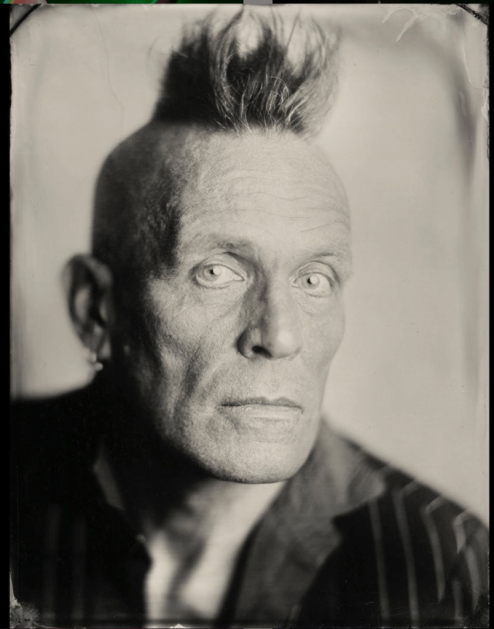


Lorenza Mazzetti - 'The Sky is Falling'
A masterpiece on thought, childhood, adulthood, humanity, and, ultimately, of transcendence through the eyes of children.

Jamie Fisher works as a freelance writer, a translator, and a researcher. On paper, that should result in a lot of work that required a lot of rest. That has evidently not been the case: Fisher has written what is most likely the best non–fiction book of 2026.
Nearly a quarter of a century has passed since Elliott Smith died. Many stories and feelings surround Smith’s life and death, which makes for many different perspectives; in spite of the vortex of multitudes that surround Smith’s life and work, I think Fisher’s book is and will remain the best book about Smith.
Listening to Andrew recount these memories, Elliott telling all his stories to a stranger again, I felt, for the first time, a kind of exhaustion. I thought about something Nelly Reifler remembers Elliott telling her the last time she saw him in New York: that his art didn’t exist without an audience. There’s something compulsive about the way he would tell the whole story of his life to strangers, like he wasn’t real unless he was telling his story, performing it. And it made me wonder if Elliott always needed to perform himself to know who he was. If Elliott didn’t exist, alone in a room. Follow me now, ’cos I only perform for a crowd, he wrote in a draft lyric. Never loved alone.
I read many books. I review some of them. Honestly, a lot of the books I read are hit–and–miss; it takes just a few pages to kind of know the book, to know the wrest of the editor. This book held back a few punches that floored me and made me realise I had no idea how the book would turn out.
When I first started listening to Smith back in the 1990s, I knew that something great happened. From the start, it was clear that his songwriting was exceptional. For example, listen to ‘Angeles’, one of his most famous songs: a synth, his acoustic guitar, his doubled vocals: The Beatles are kind of in the background, but the song is sublime, a sum greater than its parts, very different from much that was released at the time. Listening to this song in headphones elevates the listener. I remember being at the cinema a couple of decades ago. It was an IMAX movie, the type of film that takes over the entire field of view. I saw an icy stage: Antarctica. Suddenly, Smith’s multi-layered voice came in and sang The Beatles’ ‘Because’. The song brought me places that I can’t describe, far beyond the snowy ice that took over my entire visual field, beyond the original version of the song. I went far beyond cold, ice, and even physical sensation.
This book does the same thing but in more ways.
Then he starts playing “Plainclothes Man”:
you’re everybody’s second home always trying to get me alone an easy way to lose it all
It’s a song about addiction, probably heroin, but like most of Elliott’s songs about addiction, it’s not really about the drugs. It’s about change and need. When he wrote it, in the mid-nineties, he was on his way out of his band, entering the solo career that would define him.
Fisher uses simple words—carefully selected—to describe Smith, his world, and the worlds of those around him. Usually, authors shoehorn a set of voices into their own box of words to fit with the story. This book is more than a too-simple concept.
Not only are we presented with thought–through and carefully researched parts of Smith’s life. There’s wondrous interviews with many who were close to Smith, some of whom have never before agreed to an interview. Fisher’s analysis is not only sharp but critical, far from the doe–eyed glare that often comes over authors who find themselves in the presence of fame, especially that of the mythical kind. And Bog knows that mystery surrounds Elliott Smith.
I am aware that this review is, so far, only filled with near-romantic words about the greatness of this book. It is, to me, starkly clear that this book not only complements but extends the work of Smith. Big words, I know; they are true. When I was a kid I read Revolution in the Head: The Beatles’ Records and the Sixties, Ian MacDonald’s book about The Beatles’ recordings. He heard things I had not at all heard, seen things I had not seen; as a result, I felt things about The Beatles that I had not previously felt. Nobody Broke Your Heart is truly a sublime work of art, based on hard work and the mind of a singular writer. This book is far, far beyond the brevity of Wikipedia or Internet sleuthing. It’s gumshoe, it’s will; it’s intelligence and a thorough understanding of the human psyche and of art. It’s also what makes you tap your feet when you hear a great song: you can’t fully explain why, you just know. This book is a great book.
I’ve always wondered what happened between Smith’s albums Either/Or and his major–label debut, XO. Fisher paints a picture of a human just like the rest of us, a human with great flaws that may ultimately have led to his death.
As I worked on this biography, Elliott’s friends and family told me about a lanky teenage boy who took his little sister on picnics and taught her what apartheid means; an anxious college student who couldn’t sleep until he had listened to Elvis Costello’s Trust all the way through; a musician who would catch your eye in the studio and then pretend to walk downstairs until the top of his head vanished under the control room window. He was musically omnivorous, in love with George Harrison but also Marvin Gaye, the Saints, Dionne Warwick, Lead Belly, and Smokey Robinson. He was wry, thoughtful, infuriating, impossibly bad at keeping in touch. He could be a contrarian for the joy of it. He hated the Eagles but once got in a debate with a girlfriend, trying to convince her that the chord progression in “Hotel California” was interesting enough to be salvageable. Sometimes he was angry that he hadn’t written “Rocket Man.” “Literally angry,” his friend Garrick Duckler told me.
Fisher has created anything but hagiography; lazy journalists liked to say Smith was ‘dark’ and troubled. I’m glad that this book clears up a lot of myth that surrounds Smith. Apart from his struggles, he appears to have been funny, kind, considerate, a thoughtful person, and a thinker.
“The lyrics that Elliott and I were most attracted to,” Garrick says, from Elvis Costello and Dylan to Morrissey and Neil Young, “were all people who felt highly ambivalent about aspects of masculinity, power and vulnerability, sexuality.” Songs like “You’ll Never Be a Man,” from Costello’s Trust, spoke to Elliott’s resistance to becoming “an asshole man in a patriarchal world,” in Garrick’s words, but also left him without options. “Elliott would never want to be a man in a traditional sense, but he was also not okay with alternatives to that,” Garrick says.
Fisher really reached into and through interviewees.
Neil and Elliott were very close, joined at the heart. Over the years, Elliott told Garrick repeatedly that there was a very short list of people he would not do well without: Garrick, Neil, and Gary. Neil described Elliott as his brother. It isn’t something you have to look hard for, their affection for each other. In photos from the Heatmiser days, you can see them wrestling, goofing off. There’s a picture of a late night where Elliott’s head is slumped on Neil’s shoulder as he drifts off, a smear of blue hair dye on his forehead. In their house on Sixteenth, Neil kept photos of the two of them on his bedroom wall, across from R.E.M. and Beastie Boys posters. For a long time, he knew Elliott better than anyone, even if that sometimes felt like not knowing Elliott at all.
Parts of extreme adolescent darkness, heartbreak, and fears are on the pages, as are parts of fun, goofing off, wanting to leave home, and love. Smith’s romantic loves and his love for music stand out extremely well in this book.
Elliott was diagnosed later with obsessive-compulsive disorder, and it meant that words and images would keep running through his head, thoughts he tried to push out of his mind. In a draft of “Color Bars,” he wrote, with clear frustration, “Fuck the screen that shows me everything.” He wrote songs about being trapped in patterns like cages, repetition he couldn’t escape. And childhood never left him, always raw, like he was fourteen and helpless again. How much of that rawness was caused by his childhood itself is still a matter of debate. Later, he would talk about a sense that something darker had happened, something Ashley never saw.
This book is great in the sense that it does not try to cover every corner in a trainspotter’s way. There’s no list of guitars owned by Smith, no maps, no boring detail that white and middle–aged male writers are prone to leave behind. (Trust me on this, I’m white and middle-aged.) Instead, we’re treated to mystery and what can only be told by a patient biographer, the kind who’s spent time listening to people.
Rachel was sitting in the car when Elliott played “Needle in the Hay” for their father for the first time. Before hitting play, he turned around and told her, worried, “I want you to know that this song is going to sound more upsetting than it actually is. It’s a metaphor.” He would refer to it later as “more of a ‘fuck you’ song than it was even a heroin song.” But like all the songs on his self-titled album, “Needle in the Hay” would feed a narrative of Elliott as an addict, or former addict, that he didn’t always discourage. People who toured with him in these years but didn’t know him well have described his stomach problems very confidently as withdrawal symptoms. Even friends who knew him well then still have a lingering uncertainty when they look back at the lyrics. The lines between life and art blur, and the fact that they blur so persuasively is a testament to Elliott’s craft more than documentation of time spent shooting up. It isn’t something the songs romanticize either. The heroin addict in “Single File” is an “idiot kid”; the boy in “Speed Trials” is a “little child” who takes amphetamines “when the socket’s not a shock enough.” They are making colossal mistakes, fucking themselves utterly, something Elliott is ultimately as hard on as he is sympathetic to. Over time, the gap between Elliott and the persona in the songs shrank; by the time he sang “Baby Britain feels the best / floating over a sea of vodka,” it was very small, less a way of exploring fictional worlds than finding language for the one he was in. The self-destructive impulse was real. The drugs weren’t always.
The book flows in a natural way like breathing calmly. There are no real lulls, places where a 560–page book could be boring. I’m not a Smith nut in the sense that I read everything and listen to everything he’s ever released. When a book is as well-written as this one, I do take heed.
There are passages about Smith’s childhood, about his suspicions of having been abused as a child. There are many accounts about his addictions, none of which feel speculative or bad in any way. Interviewees are allowed to sound contradictory; this is often what happens when we’re left with memories of a person after their suicide. Or, at least, what was probably suicide.
The book not only respectfully and tenderly deals with Smith’s death but also digs deep in what may have been his last romantic relationship, that with the person who literally wore Smith’s blood on her hands as police entered his home as Smith died.
Either/Or is named after the book by Søren Kierkegaard, published in 1843. It sets different visions of how you can live against each other: living for pleasure and beauty or keeping our ethical obligations to other people. It was on Elliott’s mind all year as he wrote, the tension between art and responsibility. “I mean, I think that was an internal battle of his for sure,” Neil says. Garrick remembers feeling “somehow touched” when he heard the title of the album. They were at Powell’s together when Elliott bought Kierkegaard’s book, in the early nineties. Naming the album after it felt, to him, like a way of preserving the person Elliott was then, before he became famous.
There’s also the point of fame. Everything in Smith’s life seems to have changed after he became world-renowed for writing a song that was nominated for an Oscar. At roughly the same time, Smith entered the major–label world and released XO, an album that contrasted relatively sharply against what he had released until then.
Smith was a sensitive person. That much can easily be surmised through his lyrics, even though he was a careful songwriter. He did care about what people thought, what journalists thought, even though he was driven and made most of his own decisions. His songwriting developed at a rapid pace and he constantly experimented. Then, there was heroin and other drugs. And lies. And friendships lost.
“Everybody Cares, Everybody Understands” is often understood as a generally angry song directed at the people involved in the intervention, but it seems directed at Slim in particular. An early version ends: “some things are for no one to know / and for you, twelve-stepping cop, to not find out.” “He was really mad at Slim,” Neil says. “He thought Slim made him pay for the whole intervention.” The refrain in the final song, about “the brilliant sun / raining its guiding light upon everyone,” is a seething pun on Slim’s name: Sun. Moon.
There’s love.
He had come to Paris without a guitar, and went to a street lined with guitar shops and bought a Yamaha. He wrote “Place Pigalle” a few days after they met. One night, he slid his notebook across the table so she could read it. A look—you know, it’s killed many men / and I’ve been all of them / inside a week. She didn’t know what to say. “A bit at a loss for words, almost embarrassed,” she says. “I do remember joking that I had never killed anyone.”
Smith’s relationships with women are detailed in the book; they’re important, not only to nail down his life but also what seems to be his faith. Fisher has gone very far in describing Smith’s relationships. It’s hard for me to think of another music biography where the author has managed to speak with people in ways as deep as these, where the results so valuably speak for themselves. And the results are kaleidoscopic, another clear example of how Fisher let the voices of others show their truths rather than Fisher having tried to shoehorn voices to fit a narrative; this book is nuanced, it’s no joke, it’s beautiful.
There are conversations in this book, materials built from letters, from deep conversations with people who knew Smith intimately. Pair these voices with Smith’s songs, with memories of his music as they appear in films like Gus van Sant’s Paranoid Park, and the spectrum of everything that made Smith widens. This book is the kind of book that makes us look inward, not just onto a page.
The last part of the book is not necessarily the hardest to get through, but for myself, it was the most harrowing. I can’t say the book describes events that lead to Smith’s death, but Fisher has very carefully and expertly interviewed people who were closest to what happened to ultimately paint what may be a clearer picture than any of the persons could individually accomplish. There’s heartfelt analysis in every line. And there’s sharp and intelligent critique of the words from his last girlfriend, a person who clearly tries to craft their own narrative, one that clearly and often differs from the opinions of others. It’s very upsetting to read about Smith’s relationship with that person. Smith’s father wanted Fisher to know that the investigation into Smith’s death is still open.
What became From a Basement on a Hill, the first posthumous Smith album, is of course unfinished, yet finished, yet a masterpiece. Listening to the album while reading Fisher’s words is not unlike reading the MacDonald book about Beatles recordings. There’s so much life, mayhem, and fun in Fisher’s book. It’s very exciting to read about Smith’s artistic process driven by curiosity and chance more than musical virtuosity. Fisher magnificently and simply shows how Smith was a nuanced, breathing, and very much artistic human being, far from the simplistic and disgraceful image of a two-dimensional junkie who didn’t want to live.
“Most of his lyrics, to my mind, are sophisticated ways of deflecting help,” Garrick told me. There’s nothing lonelier, he says, than the loneliness of someone who’s sympathetic to the defeated helpers all around him.
I know that I want too much with this review. With every remaining word, I know I’m going far over an edge. This review is not the nuanced and wondrous created thing that is its subject. To paraphrase a song, I’ve tried to catch lightning in a jar. However I’ve failed, trust me: the book is lightning in a jar. Buy the book, give it to friends, make it the recurring gift of the year: every person to whom you present this book will thank you.
‘Place Pigalle’ is one of Smith’s unreleased songs.
Ultimately, we’re left with a wonderful book about a singular artist. Smith lives forever. He was an intensely lovable person, filled with horrors, often abject, a loathed addict. His words offer us an apeirogon of perspectives, mainly into ourselves.
Seldom is a book as good as its subject. However, Fisher proves something different because this book is larger than the sum of its parts; Fisher has created an artwork to which we should compare most other books.
She wants to remember his generosity, his sweetness, his kindness. The ecstatic letter he left her once, describing a kind of “unbreakable” happiness she had opened to him, a feeling he said he had given up on. How he would buy a bucket of roses outside a concert and pass them out to strangers one by one. How he made her feel like someone saw her as she was and loved her anyway. “I felt like that was the true him, you know?” she says. And I understand. It’s the way I want to remember him too. But like any memory, it’s also about the way we remember ourselves.
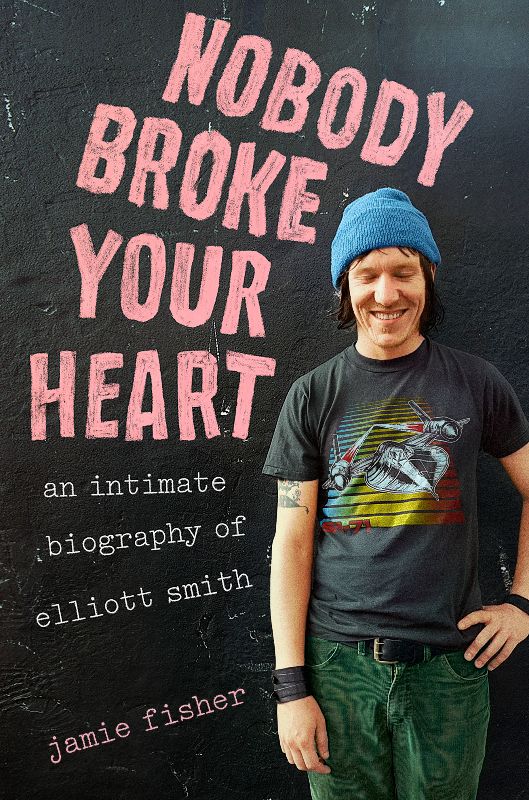
Nobody Broke Your Heart: an Intimate Biography of Elliott Smith is published by Dutton on 2026-08-25.
A masterpiece on thought, childhood, adulthood, humanity, and, ultimately, of transcendence through the eyes of children.
A impassioned, needed, and arrhythmic book about a groundbreaking record label and its great artists and producers.
A messy collection of memories from a life as a music lover, a punk musician, and a music writer.