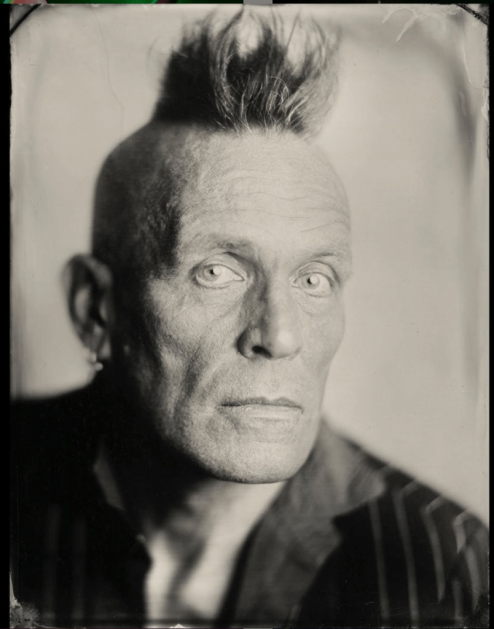


Jamie Fisher - 'Nobody Broke Your Heart: an Intimate Biography of Elliott Smith'
One of the greatest music biographies I've ever read. The book is sublime, loving, critical, investigative, analytical.

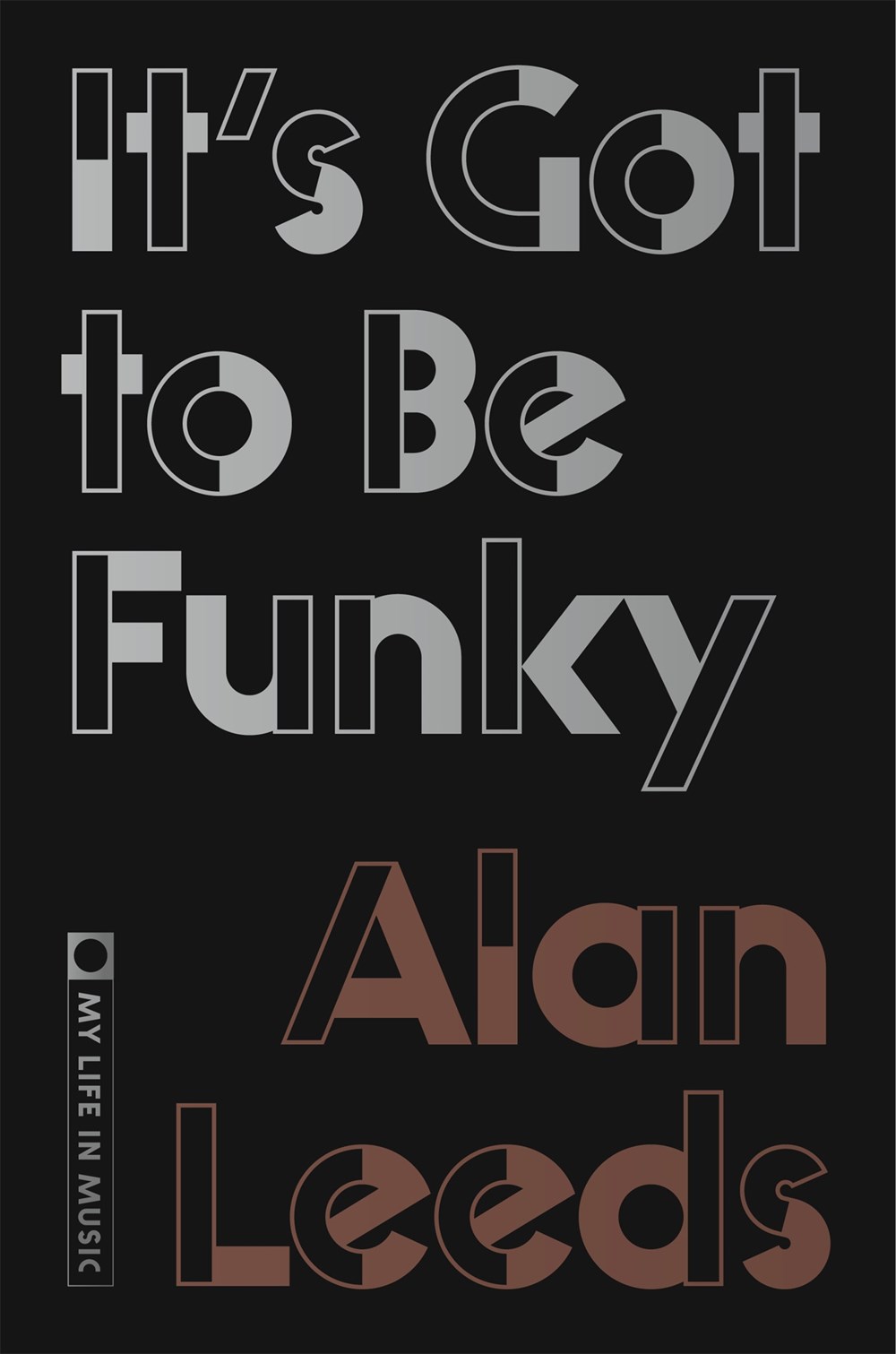
You don’t know who Alan Leeds is?
The man in the video above is Alan Leeds, talking about the funk. Or rather, he’s talking about P-funk and how that went down after James Brown built funk and soul.
My introduction to Alan Leeds was the important BBC TV series Dancing In The Street1. The series was a very serious and fun attempt to show the history of popular music from the start of the 20th century up until when the series was made, which was in 1995.
Alan Leeds was the tour director for James Brown, Prince, D’Angelo, Maxwell, and Chris Rock (yeah, the stand-up comic) among other persons. He handled Prince’s music label, road managed Kiss (yeah, the rock band) and Barry White, toured the world, advised superstars, went from having no job to doing fifty things at once, from experiencing Prince’s breakthrough moment with Purple Rain to trying to prevent him from dying onstage, in a bathtub, no less.
Quickly, another call came. I didn’t want to answer it but I knew I had to. It was Questlove and D’Angelo on a three-way. Somehow amid their sobs I heard the words: Prince is dead. Three things happened in the very next moment. My heart broke, I shed tears, and I suddenly felt old. Not nursing-home old, but music-business old. Grieving is such a damn selfish emotion. So often it shifts from about the deceased to about ourselves. Now the two iconic employers my career is most identified with, James Brown and Prince, were both dead. How could I follow that?
This is the type of memoir that could have been obnoxious if it weren’t for self-deprecation, a keen sense of humour, and an acute sense of rhythm. Luckily, Leeds has all of that in spades along with the good grace to not over-claim his own importance. Having said that, Leeds was and is important. Shit, if I’d even have carried an audio cable to record ‘Cold Sweat’ or ‘Say It Loud - I’m Black And I’m Proud (Pt. 1)’ I’d have been important too, but Leeds has done a lot of shit throughout the years that really made me drop what I was doing in order to read this book at once.
While hard work and fun is at the center of this book, the backbone is Leeds’s love of Black music and culture. He is a white man who was trusted as a white gatekeeper for James Brown.
Truthfully, a lot of my career hadn’t seemed real. Witnessing historical events is seldom by design. I didn’t know I’d be in the studio when James Brown recorded “Sex Machine.” Or end up with a cameo in Prince’s Purple Rain. The events I experienced may not be in the annals of world history, but they are definitive benchmarks in the development of Black music.
This is no exaggeration. Leeds was there when Brown recorded ‘Cold Sweat’, a song that That would have been enough to have sent me through the stratosphere, but Leeds kept it cool. Or, as he says it in the book, a tour manager’s job is to move his flippers as fast as possible while appearing calm above the waterline.
Leeds started his work in music by DJing for a Black radio station. He’d taped an unreleased James Brown song off the television and played it on the air.
Of course all the record stores in town called wanting to know what record all the kids were clamoring for. About a week later, Tom Mitchell got a call from Brown’s manager, Ben Bart. “Tom, what in the world are you guys doing down there?” When Tom explained, Bart put Brown on the phone. “Mr. Mitchell, you tell that young kid to keep on playing it! I love it!”
That’s the start of Leeds’s collaboration with James Brown, who got back to Leeds and asked if he’d work for him.
It’s intense to even think about how much work Leeds must have put down from the start, to learn about promoting an artist, their latest songs, all over the nation. And this with James Brown, the biggest Black artist of the time, if not the biggest artist in the USA, full stop.
After his work with Brown, Leeds started working with an artist who had yet to hit his stride: Prince. So, they make Purple Rain, the film and the album, and the tour is about to kick off.
Nothing comes easy. On the second night of production rehearsals, the prop tub was bolted onto its center stage riser. Prince was ready to practice the bathtub scene. Roy Bennett, Steve Fargnoli, and I were sitting at the light board, anxious to see how the routine played out. We watched intently as Prince tentatively worked his way into the tub. As he lay back, the entire tub suddenly somersaulted backward, flipping Prince onto the stage below! I jumped off the light board and raced to the stage. It’s funny how the mind works. Obviously, my first concern was Prince’s condition, but in the split seconds it took to run across the arena, I was already speculating how an injury could delay the tour and inflate expenses. I saw purple dollars floating away through a flock of doves.
I dig how Leeds plainly puts things. No big frills, no showboating, just the facts. Even when the facts are, frankly, garish as fuck.
Prince was quiet most of the ride but he did ask me what I’d be doing next. I gave him the standard freelancer answer—go home and wait for the phone to ring. He smirked. On the way to his gate, we stopped at a newsstand. Staring us in the face was the new issue of Rolling Stone with none other than Prince and Vanity on the cover! He insisted on buying a copy himself and I thought the young cashier would faint when she recognized him. I bought a copy too and asked him to sign it. It hangs in my office and reads simply “Thanks, Prince.”
Leeds has seen some shit. I’m in awe of the man. He managed not only to keep his job while James Brown got rid of his old garde and got in Bootsy Collins, Catfish Collins, etc., the so-called J.B.’s, and did the same with Prince when Wendy and Lisa left his band along with Bobby Z.
Some of the anecdotes are fun because rock stars can be such little divas. On Gene Simmons in Kiss:
Speaking of food, Gene could be prickly when we’d have breakfast or lunch in these hotel restaurants. Somewhere down south, a bunch of us congregated for a late lunch. It was around 2:00 p.m. and the restaurant’s staff was reduced to a single waitress. There was probably only one cook on duty, because our orders came out slowly and randomly. A few of us began eating but not Gene. He was getting antsy. Finally he got the young server’s attention. “How come these guys are eating and I’m still waiting?”
The waitress responded with a thick drawl, “I’m sorry. I’m fixin’ to check on it right now.”
Simmons barked back, “Fixin’?” Then he slowly said, “To fix is to repair. That’s what the word fix means. Why do you need to repair my lunch before I can eat it?”
The poor girl just stood there. She didn’t know if he was joking (he wasn’t). He finally got his food and no more was said. But Paul, Eric, and I were in hysterics. Gene didn’t think it was funny. Instead of laughing, he muttered, “No wonder they can’t ‘fix’ lunch, they don’t even understand English.”
There’s a lot of sobering recollections throughout Leeds’s book. I wish there’d have been more emotive recalls about his family and love! Having said that, this is more a tome from a media-trained professional than someone who pours out his heart in a book; this is no Jamie Fisher’s Nobody Broke Your Heart.
Leeds describes his relationships with people with grace, honesty, and sweetness. He deftly describes the sensations of being white and working with Black artists from the 1960s. Leeds was part of a quiet and violent revolution, both in the mind and on the streets.
There’s a lot to tell. Leeds lays it out. The man unfortunately stopped touring nearly ten years ago, but he’s written this book, complete with curse words (which I love) and a lot of action. Again, the man was around James Brown’s and Prince’s most exciting periods, according to yours truly. Holy fucking shit. As you can tell, I can’t keep it together because I fucking love the music of most of the artists that Leeds has helped.
Another guest, this time in New York, was the great Miles Davis. Unlike Stevie, Gwen knew Miles. He used to call our house whenever he wanted to talk to Prince. If we weren’t home to take the call, Davis’s raspy message was usually “Tell that little purple motherfucker to call me!”
Leeds doesn’t brag, which is very nice. The book holds up throughout, which can’t be said for a lot of music-biz memoirs. This one’s from the heart and the mind, which shows. Leeds has been writing about music for a long time. Do yourself a favour and pick up The James Brown Reader, a book that Leeds edited with Nelson George, and also pick up Star Time, one of the greatest music collections I’ve ever heard: a four-CD box of James Brown. Leeds won a Grammy award for his liner notes. I don’t give a fuck about awards but just listen to the damn thing and make your life better, OK? There’s so much love and care in here.
While you’re at it, check out this clip from Mike Judge’s excellent animated series about country, rock, and funk, Tales from the Tour Bus:
In short, the book is a wild and kind ride. I don’t miss anything in this book; it’s written straightforwardly, like a Mickey Spillane book. À Rebours, this ain’t, and I’m glad for that.
The book isn’t all fun and games. Leeds has lost James Brown, Prince, D’Angelo, and others. To see people leave an immense impression on yourself and die is what it is, and Leeds writes heartfelt about burials, memories, bad times, the good. There’s heart on every page.
I hope Leeds doesn’t stop communicating with the world; we’re better off with his communications. Leeds, don’t fucking stop the funk.
The first and eight episodes set me on fire, being mostly about LIttle Richard and punk, respectively. This was the first time I saw Jonathan Richman and possibly the first time I saw Little Richard, one of the artists and performers that I love the most. ↩
One of the greatest music biographies I've ever read. The book is sublime, loving, critical, investigative, analytical.
A impassioned, needed, and arrhythmic book about a groundbreaking record label and its great artists and producers.
A messy collection of memories from a life as a music lover, a punk musician, and a music writer.